
The model is the commodity
Tools, permissions, context, validation, and recovery — that’s where durable advantage accumulates.


FossibleWorks is an Applied AI development partner. Foundation models are a commodity now. Differentiation is in how you apply AI: agent harnesses, context engineering, retrieval, and fine-tuned open-weight models — on infrastructure you control, with permissions, version history, and audit trails built in.
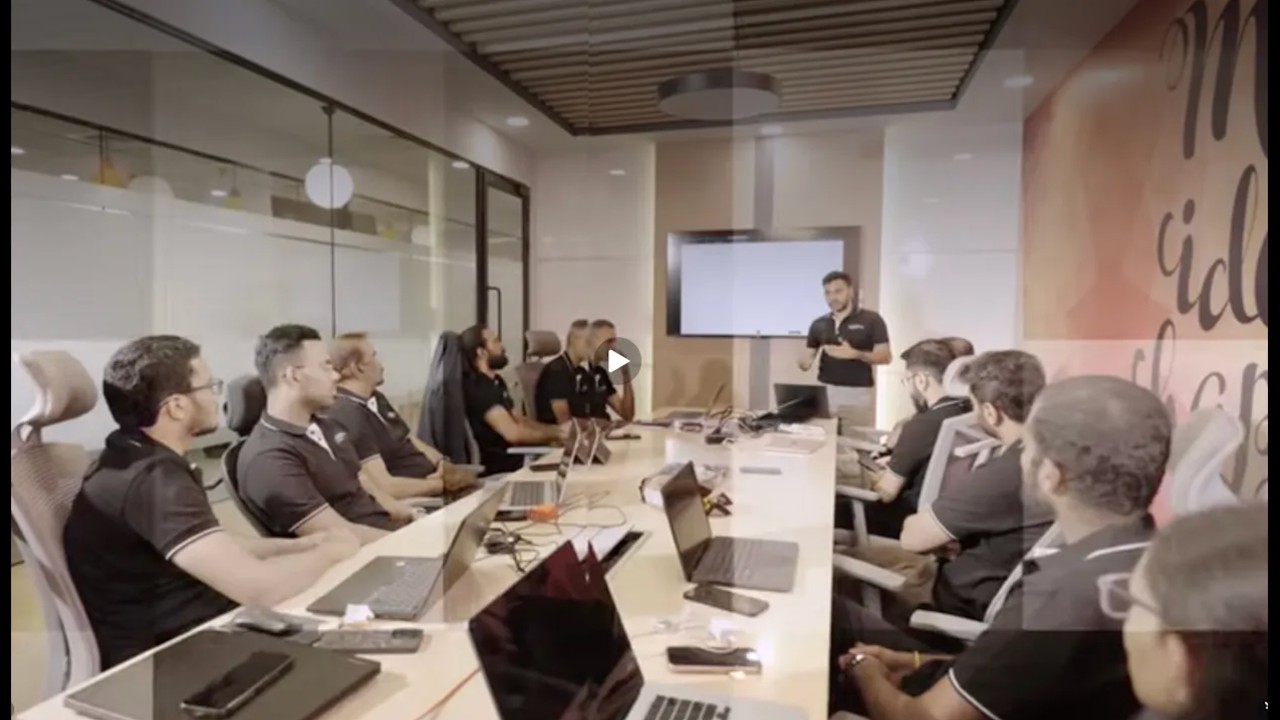
Agents break the old SaaS bet. Customers stop buying a faster way to do the task and start buying the task done — on a substrate the agent can actually operate. Two teams pointing the same frontier model at the same task get wildly different results. The difference is the harness.
Tools, permissions, context, validation, and recovery — that’s where durable advantage accumulates.
In regulated domains the durable design is human-in-the-loop. Catchable and reversible, not “rarely wrong”.
REST for developers, MCP for agents — over the same record, the same permissions, the same audit log.
Routing, caching, and early evals decide the unit economics. Margin is whatever the harness doesn’t burn.
The model is the easy part. The harness — tools, context, retrieval, evals, and serving — is where production systems live or die.
MCP tool layers, permission scoping at the boundary, output validation, error-recovery loops, approval surfaces, multi-agent orchestration, tracing and observability.
Context budgeting, prompt caching, compaction, session and long-term memory, self-describing metadata, and model routing — small models for routine steps, frontier for hard calls.
Ingestion and chunking, embeddings, hybrid BM25 + vector search, reranking, graph RAG, grounded citations, and permission-aware retrieval — a query never surfaces a document the caller couldn’t open.
LoRA / QLoRA, supervised fine-tuning, DPO preference tuning, distillation into small cheap models, dataset curation and synthetic generation, quantization, and self-hosted serving.
Task-level eval harnesses, regression suites on real traces, faithfulness and recall scoring for retrieval, red-teaming, and cost and latency budgets enforced in CI.
GPU provisioning, on-prem and air-gapped deployments, model gateways with fallback, prompt and model versioning, and cost attribution per workflow.
Anatomy of a Harness
Anyone can put an MCP server over an app in a weekend. Almost no one can hand an agent permissioning, version history, and a compliant review surface that already existed before the agent showed up.
Humans and agents act through the same record. No parallel backdoor, no split audit trail.
Every entity is introspectable, so an agent can discover what exists and what it is allowed to touch.
Access controls enforced at the system boundary — the agent hits the same RBAC a human would.
Every write is a versioned, reversible record by default. Error recovery is real, not aspirational.
A cockpit where an operator or auditor can see, approve, and reverse agent actions.
How We Engage
Substrate assessment, agent-readiness score, use-case shortlist ranked by value over risk, and a token-cost plus unit-economics model.
One production workflow shipped end to end: harness, MCP tools, evals, review surface, and a runbook your operators can own.
Dataset curation to LoRA to eval to self-hosted serving — with a measured quality and cost delta against the frontier baseline.
We run the agents and are paid per unit of work completed, with SLAs and a human approval gate where regulation demands one.
Built on our own substrate
Inherit the substrate instead of spending a year re-implementing audit, RBAC, and version history.
Hydra AI / Hydra MCP
The world's most focused AI dev agent for ERPNext and Frappe — with deep ERP domain knowledge, MCP tool calling, and optimized token management. Hydra exposes patient operations, clinical orders, billing, inventory, accounting, and any custom object as a structured, permissioned, auditable tool surface.
Espresso Cloud
Private CI/CD, self-hosted GPU, monitoring, and disaster recovery. Spin up the environments your harness needs — including air-gapped and on-prem — with enterprise SLAs. The inference an agent burns is your cost of goods; the infrastructure has to be yours to optimize.
Fossible Sprints
A dedicated dev pod — BAs, PMs, and engineers — delivering with an AI-augmented workflow and enterprise-grade guardrails. From spec writing and test-driven implementation to automated static analysis, AI code review, and auto-deployed PRs. Flat monthly fee, no surprises.
Medplum MCP exposes the full FHIR R4 resource tree as semantically described tools, with SMART-on-FHIR scopes and AuditEvent generation enforced at the tool boundary. Pair it with Hydra MCP when the workflow spans operations and clinical data.
Healthcare IT
Stack
Six situations we walk into — and what each becomes.
Hover any row to see how it reads with Fossible
Incumbent operators
Today
With Fossible
Years of data and distribution behind an agent-hostile API — the asset is there; the substrate is not.
An MCP tool layer over the systems you already own, with permissions scoped at the boundary.
AI-native startups
Today
With Fossible
Runway going into audit logs, RBAC, and version history instead of the actual work.
Audit, RBAC, and version history on day one — ship the work that is actually yours.
Healthcare and payer back-office
Today
With Fossible
Prior auth and claims at volume — with zero tolerance for a black box.
Permissioned agent workflows with review surfaces and audit trails built for regulated volume.
Finance, insurance, and banking
Today
With Fossible
Rules-bound work agents could carry — if every action were defensible.
Every agent write permissioned, versioned, and reviewable — defensible by default.
Regulated and air-gapped workloads
Today
With Fossible
Nothing leaves the building. Including the model.
Self-hosted harnesses and open-weight models — code, data, and inference stay in your boundary.
Demo-to-production teams
Today
With Fossible
The happy path demos. Production numbers never arrive.
Harness, evals, and unit economics built so production metrics follow the demo.
FAQ
Yes. We scope and deliver Applied AI work — agent harnesses, context engineering, retrieval (RAG), fine-tuned open-weight models, and work sold as a service — with production guardrails on client-owned infrastructure.
An agent harness is the tooling around the model: permissions, tool routing, MCP integrations, evaluation, version history, and audit trails. We build harnesses so teams win on reliability and compliance, not on picking the latest foundation model.
Hydra AI agentically implements ERPNext via Frappe MCP. Fossible Sprints provides AI-augmented product delivery pods. Applied AI covers bespoke agent systems, RAG, and fine-tuning — often on the same open-source stacks we implement for healthcare and enterprise ERP.
Most clients start with a 2-week, fixed-fee AI Readiness Audit: a substrate assessment, agent-readiness score, ranked use-case shortlist and a token-cost model. From there, an Agent Build Pod ships one production workflow in 6–12 weeks, a Model Lab fine-tunes and self-hosts a model in 4–8 weeks, or we run agents ongoing under a Work-as-a-Service model.
Yes. We deploy agent harnesses, RAG and fine-tuned open-weight models on infrastructure you own, with native permissions, version history and a human review surface — and measure quality and cost against a frontier-model baseline before you commit.
Yes. Healthcare is our deepest domain: we connect AI agents to FHIR data in Medplum and to hospital operations in ERPNext through permissioned MCP servers, so agents read and write through the same access controls and audit trails as your staff.
Talk to us about the harness, the evals, and the unit economics — not another proof-of-concept that dies in production. We'll scope an engagement within 48 hours.


